
Mid tier audit firms Singapore companies hire sit below the Big 4 in size but hold the same ACRA registration and apply the same Singapore Standards on Auditing. They win the SME and subsidiary mandate because they deliver the same audit opinion with more partner involvement, a clearer fee, and a faster turnaround. This guide defines the tier, matches company profiles to firm tiers, and says plainly when a mid-tier firm is the wrong choice.
The mid-tier exists for one reason. The Big 4 charge Big 4 fees, which are designed for large and complex audits. For an SME or a mid-sized subsidiary, that often means paying for capacity you never use. The mid-tier is not a niche. It serves the largest, most underserved part of Singapore’s audit market: the companies that need a proper statutory audit but do not need a global firm to do it.
What counts as a “mid tier audit firm” in Singapore?
There is no statutory definition of “mid-tier,” so here is a working one. A mid tier audit firm in Singapore is an ACRA-approved public accounting entity that:
- Holds the same ACRA registration as any other audit firm, with at least one Public Accountant signing opinions
- Runs a full audit team across multiple engagements, rather than a single sole practitioner
- Sits below the Big 4 in headcount and revenue, but applies the same Singapore Standards on Auditing
- Often belongs to an international network, giving it cross-border reach without Big 4 overhead
The label matters less than the registration. The audit opinion from a mid-sized firm carries the same legal weight as one from the Big 4, because both sign under the same standards and the same regulator. (Source: ACRA, Audit Regulation in Singapore.)
Mid tier audit firms Singapore: the current landscape
Singapore’s audit market is a pyramid. The Big 4 hold the listed and large multinational work. A band of established mid-sized and mid market audit firms Singapore sits beneath them, serving most SMEs and a rising share of MNC subsidiaries. Below that sit boutiques and sole practitioners focused on narrow niches.
The mid-tier band is where most growth-stage companies land once they cross the audit threshold, because it pairs full audit capability with a fee that fits a smaller company.
Mid-tier vs boutique vs sole practitioner
“Below the Big 4” is not one category. Three distinct options sit there, and they suit different companies.
| Option | Strength | Limit |
| Mid-tier firm | Full audit team, partner involvement, network reach, fixed fees | Fee above a sole practitioner, below the Big 4 |
| Boutique / specialist | Deep expertise in one niche (charities, MCST, a single industry) | Thin outside that niche |
| Sole practitioner | Lowest cost, most personal contact | Limited capacity as your group grows or deadlines tighten |
For a growth-stage SME or a subsidiary, the mid-tier usually balances capability and cost best. A boutique wins when your audit sits squarely in its niche. A sole practitioner can work for the smallest, simplest companies. The fuller side-by-side of all four tiers is in the audit firms in Singapore buyer’s guide.
First, are you an SME?
Singapore has a working definition. Under Enterprise Singapore’s SME definition, a company qualifies as an SME if it has group annual sales turnover of not more than S$100 million, or group employment of not more than 200 workers. A business needs to meet only one of the two. (Source: Enterprise Singapore, SME definition.)
That is a broad band, so most privately held companies in Singapore are SMEs by this measure, even sizeable ones.
Note that the SME definition is separate from the audit exemption test. A company can be an SME and still be required to audit if it is not a small company under Section 205C of the Companies Act. Check that test in when is audit required in Singapore.
What an SME actually needs from an auditor
- A fixed fee that fits a smaller company, against a clear scope
- A partner who works on the file, not only signs it
- Fast turnaround, to protect the six-month AGM and seven-month annual-return deadlines (Source: ACRA, Timeline for Holding AGMs)
- A firm that confirms whether you are exempt before selling you an audit
Why SMEs prefer mid-tier firms
- Partner time. On a smaller engagement, the partner-to-client ratio at a mid-tier firm is lower, so a partner works on your file rather than only signing it. That is the single biggest driver of audit quality on SME engagements.
- Fee that fits. A mid-tier firm prices for a mid-sized company. Many publish or commit to a fixed fee against a written scope, so there are no surprises. AG, for example, publishes a fixed-fee statutory audit starting at S$5,000. (Source: AG, Audit Services Singapore.)
- Smaller teams move faster on smaller files, which matters because a non-listed company must hold its AGM within six months of its financial year end and file its annual return within seven months. (Source: ACRA, Timeline for Holding AGMs.)
- Knowledge of the exemption rules. A good mid-tier firm will tell you if you are exempt from audit before selling you one.
MNC subsidiary profile: what is different
A Singapore subsidiary of a multinational carries extra requirements an SME does not: group reporting deadlines, intercompany balances, and coordination with the parent’s group auditor. What it usually does not carry is the full complexity of the group itself.
So the subsidiary’s own statutory audit is often simpler than its parent’s, which is why a Big 4 default can mean paying for capacity the subsidiary never uses.
Why MNC subsidiaries are switching from the Big 4
A Singapore subsidiary often inherits a Big 4 auditor by default, because the global parent uses one. For the subsidiary’s own statutory audit, that default is increasingly questioned.
An established mid-tier firm can deliver the subsidiary’s statutory audit to the same standard, coordinate with the group auditor where required, and free up budget. This is the fastest-growing switch in the market. Where the Big 4 still wins is the listed parent, the IPO candidate, or a case where a lender or investor contractually requires a global name. We compare the two routes line by line in mid tier audit firm in Singapore vs Big 4.
The matching grid: company stage to firm tier
| Your company | Best-fit firm tier | Why |
| Small company (audit-exempt) | Mid-tier or boutique, or a review engagement | You may not need a full audit at all |
| Growth-stage SME (just past the threshold) | Mid-tier with SME focus | Partner time, fixed fee, fast turnaround |
| MNC subsidiary | Established mid-tier | Same standard, lower fee, coordinates with group auditor |
| Listed company / IPO candidate | Big 4 | Market and regulator expectations, deep specialist benches |
| Charity, MCST, sector-specific | Boutique specialist | Niche rules need niche experience |
What a mid-tier audit firm actually delivers
A full statutory audit under the Singapore Standards on Auditing, plus the surrounding services that keep the engagement clean:
- Statutory audit for Singapore companies, with an independent opinion on your financial statements
- Special-purpose and group consolidation audits where a parent or regulator requires them
- Financial reporting and statement preparation so your accounts are audit-ready before fieldwork starts
- Accounting services for audit-ready financials for companies that need the books in order first
- Corporate tax services and GST services in Singapore to keep the compliance calendar aligned
A fuller catalogue of what each audit type includes, and the eight quality markers to check, is in Singapore audit services.
The mid-tier audit fee question
Audit fees depend on company size, the state of your records, group structure and industry, so a single number is misleading. What you can pin down is the pricing model. Ask each firm for a fixed fee against a defined scope rather than an open hourly rate.
As a published reference point, AG’s fixed-fee statutory audit starts at S$5,000, with a sales (GTO) audit from S$800. (Source: AG, Audit Services Singapore.) Use those as a sense of the mid-tier floor, then get a quote for your own scope. We do not publish competitor fee ranges here because we cannot verify them.
When your company outgrows the audit exemption
Many SMEs meet a mid-tier firm for the first time at the moment they stop being exempt. A private company is exempt from statutory audit while it qualifies as a small company, meaning it meets at least two of three criteria (revenue of S$10 million or less, total assets of S$10 million or less, 50 employees or fewer) for the past two consecutive financial years. (Source: ACRA, Audit Exemptions.) Cross those thresholds and an audit becomes mandatory.
That first mandatory audit is exactly the engagement the mid-tier is built for: a company that has grown past the exemption but is not yet a large or complex group. The thresholds and edge cases are explained in when is audit required in Singapore.
When you should not choose a mid-tier firm
Mid-tier is the right answer for most SMEs and many subsidiaries, but not for everyone. Consider a larger firm if:
- You are a listed company or preparing for an IPO, where the market expects a Big 4 name
- Your group is large and spans many jurisdictions with complex consolidation
- A specific lender, investor or regulator contractually requires a Big 4 auditor
If your audit sits squarely in a narrow niche, a boutique specialist may beat a generalist mid-tier firm. And if none of these apply, the mid-tier is usually the better fit.
How to evaluate a mid-tier audit firm
Use the same checks you would apply to any firm, weighted for what the mid-tier does well.
- Confirm ACRA registration and that a registered Public Accountant signs your opinion.
- Ask whether a partner works on the file, not only signs it. This is the mid-tier’s main advantage, so make the firm prove it.
- Ask for the firm’s Practice Monitoring Programme outcome. (Source: ACRA, Practice Monitoring Programme.)
- Check international network membership if you have cross-border or group reporting needs.
- Get a fixed fee against a written scope, and a committed turnaround. The seven-criteria scorecard is in Best Audit Firm Singapore.
Why AG (Ackenting Group), and where we would refer you elsewhere
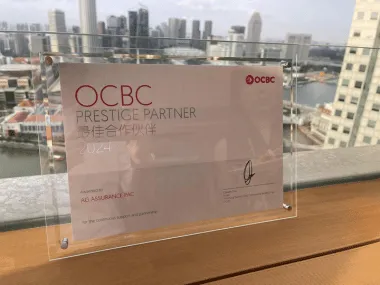
AG is a mid-tier audit firm in Singapore serving the SME and MNC-subsidiary bands. Its partners are Public Accountants registered with ACRA. Managing Partner John Woo holds CA (Singapore), FCCA, ASEAN CPA and Accredited Tax Practitioner credentials, and Audit Partner Dax Teo brings prior Big 4 audit experience to the file. (Source: AG, About Us.)
The firm reports more than 1,000 clients and over 2,000 audit engagements since inception, a fixed-fee statutory audit from S$5,000, and a 30-day completion KPI for qualifying engagements. (Source: AG, Audit Services Singapore.) It is also a member of the IR Global professional services network, which gives cross-border reach for subsidiary work.
If you are a listed company or preparing for an IPO where the market expects a Big 4 name, we will say so rather than pitch. For most SMEs and subsidiaries, a mid-tier firm is the better fit.
Frequently asked questions
What is a mid tier audit firm in Singapore?
A mid tier audit firm in Singapore is an ACRA-approved public accounting entity that sits below the Big 4 in size but holds the same registration and applies the same Singapore Standards on Auditing. It runs a full audit team and often belongs to an international network.
Are mid tier audit firms as good as the Big 4?
For the validity of the audit opinion, yes. Both tiers sign under the same standards and are monitored by ACRA’s Practice Monitoring Programme. (Source: ACRA.) The difference is scale, network reach and fee, not the legal weight of the opinion.
Why do SMEs choose mid sized audit firms in Singapore?
More partner time on the file, a fee that fits a smaller company, faster turnaround, and a firm that understands the small-company exemption rules.
What is the best audit firm for an SME in Singapore?
For most SMEs, a mid-tier or boutique firm beats the Big 4 on fit: the same opinion at a lower fee with more partner time. Score candidates on partner involvement, fixed fees and turnaround using the criteria in Best Audit Firm Singapore.
What is the best audit firm for an MNC subsidiary?
Increasingly an established mid-tier firm that can meet group reporting needs and coordinate with the parent’s auditor at a lower fee than a global firm. See mid tier audit firm vs Big 4.
How much do mid-tier audit firms charge?
It depends on company size, records and structure, so ask for a fixed fee against your scope. As a published reference, AG’s fixed-fee statutory audit starts at S$5,000. (Source: AG, Audit Services.)
How do I know if my company is an SME in Singapore?
Under Enterprise Singapore’s definition, you are an SME if group annual sales turnover is S$100 million or less, or group employment is 200 workers or fewer. You need meet only one. (Source: Enterprise Singapore.)
Does being an SME mean I am exempt from audit?
No. The SME definition and the audit exemption test are separate. A company can be an SME and still need an audit if it is not a small company under the Companies Act.
Get a mid-tier audit quote
If the Big 4 is the wrong fit and you want a mid-tier firm that puts a partner on your file, book a fit call with AG or send an enquiry with your financial year end. We will confirm whether you are required to audit before quoting.