

The best audit firm Singapore can offer you is the one that fits your company, not the one with the biggest name. “Best” is a fit assessment, and you can score it. Use a 12-item screen to cut a longlist of audit companies in Singapore down to two or three in about ten minutes, then score the survivors against seven concrete criteria. This guide gives you both, plus the red flags and how to read a fee quote.
When a partner at a large firm cannot name your industry’s reporting quirks without checking a file, they are not the best firm for you. They are the most famous one. Fame and fit are different things. Below is how to tell them apart, in the order you should actually do it.
What does “best audit firm Singapore” actually mean?
Search for the best audit firms Singapore has and you will get revenue league tables. Revenue measures how big a firm is, not how well it will serve your company. A five-person SME and a listed multinational have almost nothing in common as audit clients, yet a single ranking pretends to answer for both.
Reset the question. The audit opinion you need carries the same legal weight whether it comes from the Big 4 or from a mid-tier firm, because every ACRA-registered Public Accountant signs under the same Singapore Standards on Auditing. (Source: ACRA, Audit Regulation in Singapore.)
So the real question is not “who is biggest.” It is “who will deliver a clean, defensible report on time, for a fair fee, with a partner who understands my business.” That is what the screen and the scorecard below measure.
“Audit company” or “audit firm”: does the term matter?
In everyday use, no. People search for an audit company in Singapore, an audit firm, or a public accounting entity, and they all mean the same thing.
The precise legal term in Singapore is “public accounting entity,” the structure ACRA approves to perform statutory audits. Whether you call it an audit company Singapore businesses hire, an audit firm, or a practice changes nothing about its registration or the standards it works under. (Source: ACRA, Audit Regulation in Singapore.)
So do not read into the label. Read the registration and the track record.
How the market is structured
Audit companies in Singapore sort into four practical tiers: the Big 4 (Deloitte, EY, KPMG, PwC), established mid-tier firms, boutique specialists, and sole practitioners. Each works under the same ACRA registration and the same Singapore Standards on Auditing, so the audit opinion carries the same legal weight at every tier. What differs is scale, network reach, fee and partner time.
The full tier breakdown is in the audit firms in Singapore buyer’s guide.
Step 1: the 12-item screen to cut your longlist
You do not need to evaluate every registered firm. Run each candidate through these twelve items. Most will fail two or three, which is how you cut a long list quickly.
- Is the firm an ACRA-approved public accounting entity?
- Who is the registered Public Accountant who will sign the opinion?
- Will a partner work on the file, or only sign it?
- Has the firm audited companies in your industry?
- Can it provide references in your sector?
- Will it commit to a fixed fee against a written scope?
- What is its typical turnaround from engagement to sign-off?
- What was its most recent ACRA Practice Monitoring Programme outcome?
- Does the engagement team hold ISCA membership and current CPD?
- Does it run an independent file review before sign-off?
- Will it confirm whether you are exempt before selling you an audit?
- Does it offer the surrounding services you need, such as financial reporting or tax compliance and filing?
The first three items carry the most weight. A firm that scores well there is worth a closer look.
Red flags that disqualify a firm immediately
- The firm cannot name the Public Accountant who will sign your opinion, or cannot confirm ACRA registration
- The quote is hourly with no scope, or the fee is vague about what triggers a variation
- You only ever meet the pitching partner, never the team who will do the work
- The firm sells you a statutory audit without first checking whether you are exempt
- No reference clients in your industry, and no willingness to provide any
A firm that trips two or more of these is telling you how the engagement will go. For reference, a well-run statutory audit engagement starts by confirming whether you need one at all.
Step 2: the 7-criteria scorecard for your shortlist
Once the screen leaves you with two or three firms, score each from 0 to 3 on every criterion below. A firm that scores well on the first three matters more than one that only has a recognisable logo.
Criterion 1: ACRA registration and ISCA membership
This is the floor, not a bonus. Confirm the firm is an approved public accounting entity and that the partner who will sign your opinion is a Public Accountant registered with ACRA. Confirm the engagement team holds ISCA membership and keeps current with continuing professional education. If a firm cannot show this clearly, stop there.
Criterion 2: Sector specialism and industry coverage
Revenue recognition for a software company, inventory for a trading firm, and fund accounting for an investment holding company each carry their own risks. A firm that has audited your industry will plan faster and ask sharper questions. Ask for two or three references in your sector before you sign.
Criterion 3: Partner involvement (the most ignored signal)
On a smaller engagement, this is the strongest predictor of quality. Will a partner actually work on your file, or only review and sign it while junior staff carry the work? Mid-tier firms tend to win here, because the partner-to-client ratio is lower. Ask directly: who runs my fieldwork, and how often will I speak to the signing partner?
Criterion 4: Fee transparency and scope clarity
A fixed fee against a written scope beats an hourly estimate that drifts upward once fieldwork starts. Ask what is included, what triggers a variation, and what happens if your records are not ready. A firm that will not commit to a scope before quoting is telling you something.
Criterion 5: Mid-cycle responsiveness
Most audits do not slip at the deadline. They slip in fieldwork, when a query sits unanswered for a week on either side. Ask how quickly the team responds during the engagement, and whether you get a named contact. Responsiveness is hard to see in a pitch and obvious once the work starts, so weight the references heavily here.
Criterion 6: Methodology and quality controls
Every firm references the Singapore Standards on Auditing. Fewer can describe their actual process: how planning time is budgeted, how an independent reviewer checks the file before sign-off, and how the firm performed under ACRA’s Practice Monitoring Programme. ACRA, and ISCA on its behalf for non-listed audits, inspect audit work for compliance with the standards. (Source: ACRA, Practice Monitoring Programme.) A firm willing to discuss its PMP outcome is showing you real quality, not marketing.
Criterion 7: Cultural fit with your finance team
You will work closely with the audit team for several weeks. If the working relationship is tense, deadline days get lost to friction. Meet the people who will actually do the work, not only the partner who pitches. Fit here is soft, but it shows up as hard time saved.
The scorecard at a glance
| Criterion | What a strong firm shows | Where mid-tier often wins |
| ACRA + ISCA | Registered Public Accountant signs; team holds ISCA membership | Same registration as the Big 4 |
| Sector specialism | References in your industry | Often deep in SME and subsidiary work |
| Partner involvement | A partner works on the file, not only signs it | Yes, lower partner-to-client ratio |
| Fee transparency | Fixed fee against a written scope | Common in the mid-tier |
| Responsiveness | Named contact; fast turnaround in fieldwork | Often, smaller teams |
| Methodology + quality | Can discuss its PMP outcome and file review | Same standards apply at every tier |
| Cultural fit | You meet the people doing the work | Direct partner access |
How to read a fee quote
Audit fees depend on company size, the state of your records, group structure and industry, so there is no single price. The reliable move is to control the pricing model: ask each firm for a fixed fee against the same written scope rather than an open hourly estimate. That is the only way to compare like for like.
As a published mid-tier reference point, AG’s fixed-fee statutory audit starts at S$5,000, with a sales (GTO) audit from S$800. (Source:AG, Audit Services Singapore.) We do not publish other firms’ fees because we cannot verify them. What we can show you is what a statutory audit actually costs in Singapore, with typical ranges by company profile. The tier-by-tier cost case is in mid tier audit firm vs Big 4.
Match the firm to your profile
Once your shortlist passes the screen and the scorecard, sanity-check the match. SMEs and subsidiaries usually fit a mid-tier firm; listed companies and large groups fit the Big 4; charities, MCSTs and other niche entities fit a boutique specialist. The full matching grid is in mid tier audit firms Singapore.
The process in order
- Confirm you are required to audit this year. Many small companies are exempt. Check the small-company criteria in when is audit required in Singapore.
- Decide which service you need: statutory, internal or special-purpose. See Singapore audit services.
- Build a longlist and run the 12-item screen, dropping anything that trips a red flag.
- Shortlist two or three firms across tiers, including at least one mid tier audit firm.
- Score each on the seven criteria.
- Ask each for a fixed fee against the same written scope, so you compare like for like.
How AG (Ackenting Group) measures up
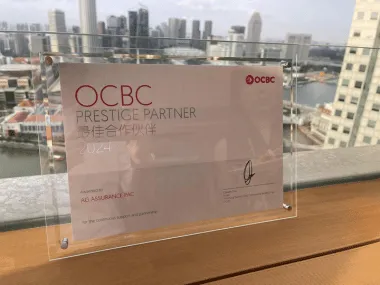
AG is a mid-tier audit firm in Singapore serving SMEs and MNC subsidiaries. Its partners are Public Accountants registered with ACRA. Managing Partner John Woo holds CA (Singapore), FCCA, ASEAN CPA and Accredited Tax Practitioner credentials, and Audit Partner Dax Teo brings prior Big 4 audit experience to the file. (Source: AG, About Us.)
On partner involvement, a partner works on the engagement rather than only signing it. On fee transparency, AG publishes a fixed-fee statutory audit starting at S$5,000. On responsiveness, the firm works to a published 30-day completion KPI for qualifying engagements. It reports more than 1,000 clients and over 2,000 audit engagements since inception. (Source: AG, Audit Services Singapore.)
AG also supports the work that sits around the audit: financial reporting and statement preparation, accounting services for audit-ready financials, and statutory audit for Singapore companies under one roof.
Frequently asked questions
What is the best audit firm in Singapore for an SME?
For most SMEs, a mid-tier or boutique firm is the better fit than the Big 4: the same Singapore Standards on Auditing and the same ACRA registration, usually at a lower fee with more partner time. The best audit firms in Singapore for SMEs are the ones that score well on partner involvement and responsiveness. See mid tier audit firms Singapore.
How do I choose an audit firm in Singapore?
Confirm you need an audit, decide which type, screen your longlist on the 12 items above, then score two or three finalists on the seven criteria and ask for a fixed fee against the same scope.
What is the difference between an audit company and an audit firm?
None in practice. An audit company in Singapore, an audit firm and a public accounting entity all describe the same ACRA-approved structure that performs statutory audits. Use the registration, not the label, to compare them.
How many audit companies are there in Singapore?
Singapore has a large pool of ACRA-registered public accounting entities across the Big 4, mid-tier, boutique and sole-practitioner tiers. You do not need to evaluate them all; the 12-item screen eliminates most quickly.
How do I compare audit companies in Singapore fairly?
Run each through the 12-item screen, drop any that trip a red flag, then ask the survivors for a fixed fee against the same written scope so you compare like for like.
Is a bigger audit firm always better?
No. Larger firms suit listed and large multinational clients. For SMEs and subsidiaries, a bigger firm often means paying for capacity you do not use and getting less partner time. Audit quality is monitored at every tier by ACRA’s Practice Monitoring Programme. (Source: ACRA.)
Does the best audit firm cost more?
Not necessarily. A fixed fee against a clear scope from a mid-tier firm can cost less than a large-firm engagement while delivering the same opinion. Compare like-for-like quotes; see mid tier audit firm vs Big 4.
Should an SME use a Big 4 audit company?
Usually not. For an SME, a mid-tier or boutique firm delivers the same opinion at a lower fee with more partner time.
How many audit firms should I compare?
Two or three is enough if you score them properly. Include at least one mid-tier firm so you have a real fee and partner-involvement benchmark against any larger-firm quote.
What credentials should the signing partner hold?
At minimum, registration as a Public Accountant with ACRA. Many also hold CA (Singapore), ACCA or FCCA, ASEAN CPA, and Accredited Tax Practitioner status. AG’s partners hold these credentials. (Source: AG, About Us.)
Put the scorecard to work
Screen your longlist, then score the survivors honestly. If you want to see how AG scores against your other finalists, book a 30-minute fit call or send an enquiry with your financial year end and industry.