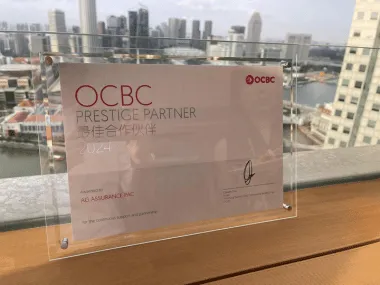

Here’s what our clients have said about us.
If you sit on an MCST council, work as a managing agent, or own a unit in a strata-titled development, you already know the accounts have to be audited every year before the AGM. Ackenting Group (AG) provides ACRA-registered MCST audits for condominiums, commercial strata malls, industrial developments, and mixed-use properties across Singapore, with fixed-fee quotes and reports timed to your AGM date, not the other way around.
What Is an MCST Audit?
Every Management Corporation Strata Title (MCST) in Singapore is required under the Building Maintenance and Strata Management Act (BMSMA) to prepare proper accounts each financial year and have them audited by a public accountant registered with ACRA, before presenting the audited accounts at the Annual General Meeting (AGM) for approval by subsidiary proprietors. Unlike a company audit, an MCST audit isn’t about profit and loss — it’s about verifying that owners’ contributions were collected, held, and spent the way the BMSMA and the MCST’s own by-laws require.
Who Needs One?
Any strata-titled development with a Management Corporation needs an annual audit — this covers residential condominiums, commercial strata malls, industrial parks, and mixed-use developments. There’s one narrow exception: MCSTs with 4 or fewer subsidiary proprietors may apply for an exemption from the audit requirement, though the exemption has to be formally granted, not simply assumed. For the vast majority of developments, with far more than 4 units, the annual audit is not optional.
What We Actually Check
An MCST audit covers the income and expenditure statement, balance sheet, and receipts and payments statement, with particular attention to two things company audits don’t have: the sinking fund and the management fund, which must be accounted for separately. In practice, the areas that come up most often in MCST audit findings are:
- Maintenance fee collection and arrears management
- Whether sinking fund contributions and withdrawals match approved resolutions
- Procurement and tender compliance for contractors (security, cleaning, lift maintenance)
- Bank reconciliations and petty cash controls
- Vendor invoices matched against services actually rendered
The AGM Timeline
MCST AGMs are typically held within 15 months of the previous one, and the audited accounts need to be ready and circulated to subsidiary proprietors before that meeting — most guidance recommends engaging your auditor 3 to 6 months ahead of the AGM date, not the month before. Missing this window can mean an invalid AGM, no approved budget for the coming year, and no legal basis to collect the following year’s maintenance fees.
Why This Matters More as Buildings Age
Singapore’s building stock is getting older, and regulators are paying closer attention to it. BCA’s Building Maintenance Masterplan has signalled a direction toward more frequent building condition assessments and stricter sinking fund adequacy expectations for older developments — meaning the audited numbers behind your sinking fund balance are likely to matter more, not less, in the next few years. An audit that just confirms the totals add up is no longer enough; it should also give your council a clear read on whether the sinking fund is actually adequate for the building’s age and upcoming major works.
Documents You’ll Need to Prepare
- Prior year’s audited financial statements
- Bank statements and reconciliations for both management fund and sinking fund accounts
- Maintenance fee collection records and arrears listing
- Contracts, tenders, and invoices for major vendors (security, cleaning, lifts, landscaping)
- Minutes of council meetings authorising major expenditure or sinking fund withdrawals
- AGM resolutions from the prior year
Our MCST Audit Process
- Scoping call. We confirm your development type, number of subsidiary proprietors, and your target AGM date.
- Document collection. You (or your managing agent) provide financial records; we flag gaps early rather than at fieldwork.
- Testing. We verify income, expenditure, and fund transfers against BMSMA requirements and your MCST’s approved resolutions.
- Reporting. We deliver audited financial statements and a management letter flagging any control weaknesses, in good time before your AGM.
- AGM support. We’re available to clarify the audit findings if questions come up at the AGM itself.
How Much Does an MCST Audit Cost in Singapore?
MCST audit fees depend on the number of units, transaction volume, and whether the development is residential, commercial, or mixed-use. We quote after a short scoping call rather than a flat starting price, but the quote is fixed and agreed before fieldwork begins.
If your development also needs a statutory audit for an on-site management company, or you manage multiple properties needing a group audit, we can scope these together — see our full range of audit services.
Why Choose Ackenting Group for Your MCST Audit
- ACRA-registered, ISCA-certified auditors who understand the sinking fund/management fund split and BMSMA requirements, not just standard corporate audits.
- AGM-timed delivery. We work backwards from your AGM date, not forwards from when we happen to start.
- Fixed, upfront quotes. No hourly billing surprises on an audit that affects every unit owner’s fees.
- One team for every compliance need. Beyond MCST audits, our full range of audit services covers statutory, grant, and group audits.
Frequently Asked Questions
Is an MCST audit legally required in Singapore?
Yes. Under the Building Maintenance and Strata Management Act (BMSMA), every Management Corporation Strata Title must prepare annual accounts and have them audited by an ACRA-registered public accountant before presenting them at the AGM. The only exception is MCSTs with 4 or fewer subsidiary proprietors, which may apply for a formal exemption.
What’s the difference between the sinking fund and the management fund in an MCST audit?
The management fund covers day-to-day running costs like cleaning, security, and utilities. The sinking fund is reserved for major cyclical works such as repainting, lift replacement, or structural repairs. BMSMA requires both to be accounted for separately, and auditors check that contributions and withdrawals from each match approved resolutions.
When should we engage an auditor before our AGM?
Most guidance recommends engaging your auditor 3 to 6 months before your AGM date, since AGMs are typically held within 15 months of the previous one and the audited accounts need to be circulated to owners in advance.
What happens if our MCST doesn’t get audited on time?
A missed or late audit can mean an invalid AGM, no approved budget for the coming year, and difficulty collecting the next year’s maintenance fees. It can also draw scrutiny from the Commissioner of Buildings under the BMSMA.
Does every condo need an MCST audit, even small ones?
Almost always, yes. The only exemption applies to MCSTs with 4 or fewer subsidiary proprietors, and that exemption must be formally granted rather than assumed. Any typical condominium, commercial strata mall, or mixed-use development well above that threshold needs an annual audit.
Can AG handle our MCST audit alongside other compliance needs?
Yes. Many managing agents and councils engage AG for their MCST audit alongside a statutory audit for an associated management company or a group audit across multiple properties, so one team handles every filing.
Need your MCST audit sorted ahead of your AGM? Get a fixed-fee quote from AG’s audit team.