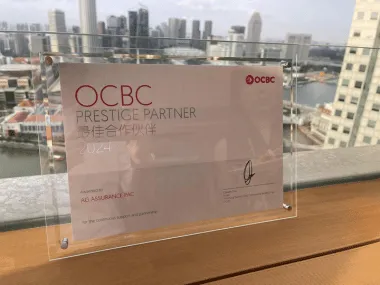

Here’s what our clients have said about us.
When your company becomes a parent of one or more subsidiaries, your reporting obligations change: you may need to prepare and audit consolidated financial statements for the entire group, not just each entity on its own. And if you’re merging entities through a statutory amalgamation, the financial statements supporting that exercise need to withstand scrutiny from directors, IRAS, and ACRA.
Ackenting Group (AG) is an ACRA-registered audit firm with leadership experienced in multi-entity group audits, including cross-border groups with components in Malaysia and across Asia — delivered under our 30-day audit protocol with fixed fees quoted upfront.
What Is a Group Consolidation Audit?
A group consolidation audit is the audit of consolidated financial statements — the single set of accounts that presents a parent and its subsidiaries as one economic entity under SFRS(I) 10 / FRS 110. Beyond auditing each entity’s own numbers, the group auditor examines the consolidation itself:
- Elimination of intercompany transactions: sales, loans, management fees, and balances between group entities must net to zero.
- Uniform accounting policies: subsidiaries’ figures aligned to group policies and reporting dates.
- Goodwill and fair value adjustments: arising from acquisitions, including annual impairment assessment.
- Non-controlling interests (NCI): correctly measured and presented where subsidiaries are not wholly owned.
- Foreign subsidiary translation: exchange differences on components reporting in other currencies.
- Component auditor coordination: where subsidiaries are audited by other firms locally or overseas, we direct and evaluate their work as group auditor under SSA 600.
When Does a Singapore Company Need a Consolidation Audit?
Under the Companies Act, a parent company incorporated in Singapore generally must prepare audited consolidated financial statements unless the entire group qualifies as a “small group” by meeting at least two of the following three criteria on a consolidated basis for the immediate past two financial years:
- Consolidated annual revenue: not more than S$10 million
- Consolidated total assets: not more than S$10 million
- Group employees: not more than 50
Key point many directors miss: even if your holding company on its own is tiny, the exemption is assessed at group level. One sizeable subsidiary can pull the whole group into audit territory.
Certain parents may also be exempt from preparing consolidated statements — for example, an intermediate holding company whose ultimate parent produces publicly available SFRS(I)-compliant consolidated accounts. We assess your structure and confirm your exact obligations before quoting.
What Is an Amalgamation Audit?
A statutory amalgamation under Sections 215A-215K of the Companies Act allows two or more Singapore companies to merge into a single surviving entity without a court order, commonly used to simplify group structures, absorb dormant subsidiaries, or consolidate operations after an acquisition.
While the amalgamation process itself centres on directors’ solvency statements and shareholder approval, audit and assurance work is typically needed to:
- Support the directors’ solvency statements with reliable, up-to-date financial statements for each amalgamating company
- Complete final-period audits of amalgamating entities up to the amalgamation date, where those entities are not audit-exempt
- Ensure the opening balances of the amalgamated entity correctly combine the merged companies’ assets and liabilities
- Prepare the group for IRAS tax treatment elections on qualifying amalgamations, where financial records must support the tax positions taken
We work alongside your corporate secretary and tax adviser so the audit, filings, and tax elections stay on one timeline.
Our Group Audit Process — The 30-Day Protocol
- Structure review & scoping (Days 1–3). Map the group, identify components, confirm consolidation and audit obligations, agree deliverables and a fixed fee.
- Component work (Days 4–18). Audit Singapore entities; coordinate component auditors for overseas subsidiaries under group instructions.
- Consolidation audit (Days 19–26). Test eliminations, adjustments, goodwill, NCI, and translation; review the consolidated statements against SFRS(I) disclosure requirements.
- Completion & sign-off (Days 27–30). Clear review points, obtain management representations, issue the group audit opinion in time for your AGM and annual return deadlines.
The 30-day protocol applies from receipt of complete records for all group entities. Multi-jurisdiction groups with component auditors may require a longer agreed timeline — confirmed upfront, never mid-engagement.
How Much Does a Group Consolidation or Amalgamation Audit Cost?
- Consolidation audit, parent + 1 Singapore subsidiary: starting from S$10,000
- Each additional Singapore component: starting from S$5,000
- Groups with overseas components: custom quote
- Amalgamation support and final-period audits: custom quote
If you also need a statutory audit for a standalone entity, or your group includes an entity receiving a government grant, we can scope everything together under our full range of audit services.
Why Groups Choose AG
- 30-day audit completion protocol for Singapore-only groups with complete records.
- Big 4-trained group audit leadership with experience directing multi-entity, multi-currency consolidations.
- IR Global network for component auditor coordination across 155+ countries.
- One roof. Audit, tax, and secretarial teams aligned on your amalgamation or restructuring timeline.
Frequently Asked Questions
My holding company is dormant — do we still need a consolidation audit?
Possibly. The small group exemption is tested on consolidated figures, so an active subsidiary can disqualify the whole group. A dormant parent may have separate relief for its own accounts, but the group position must be assessed first. Send us your structure and we’ll confirm within one working day.
Our subsidiaries have different financial year-ends. Can you still consolidate?
Yes, but SFRS(I) 10 requires the difference between reporting dates to be no more than three months, with adjustments for significant transactions in the gap. Where possible we recommend aligning year-ends — often done as part of an amalgamation or restructuring.
Do overseas subsidiaries need to be audited by your firm?
No. Overseas components are often audited by local firms in their jurisdiction. As group auditor, we issue group instructions, review their work, and remain responsible for the group opinion — a standard SSA 600 arrangement. Through our IR Global network we can also recommend component auditors where you don’t have one.
Is an amalgamation audit legally required?
The Companies Act does not prescribe a standalone “amalgamation audit.” However, final-period statutory audits of non-exempt amalgamating entities remain required, and directors signing solvency statements need reliable financial statements to rely on. Most boards engage auditors for exactly that assurance.
How long does a group audit take?
For a Singapore-only group with complete records, our protocol targets 30 days. Groups with overseas components depend partly on component auditor timelines — we agree a realistic schedule at scoping and manage all parties to it.